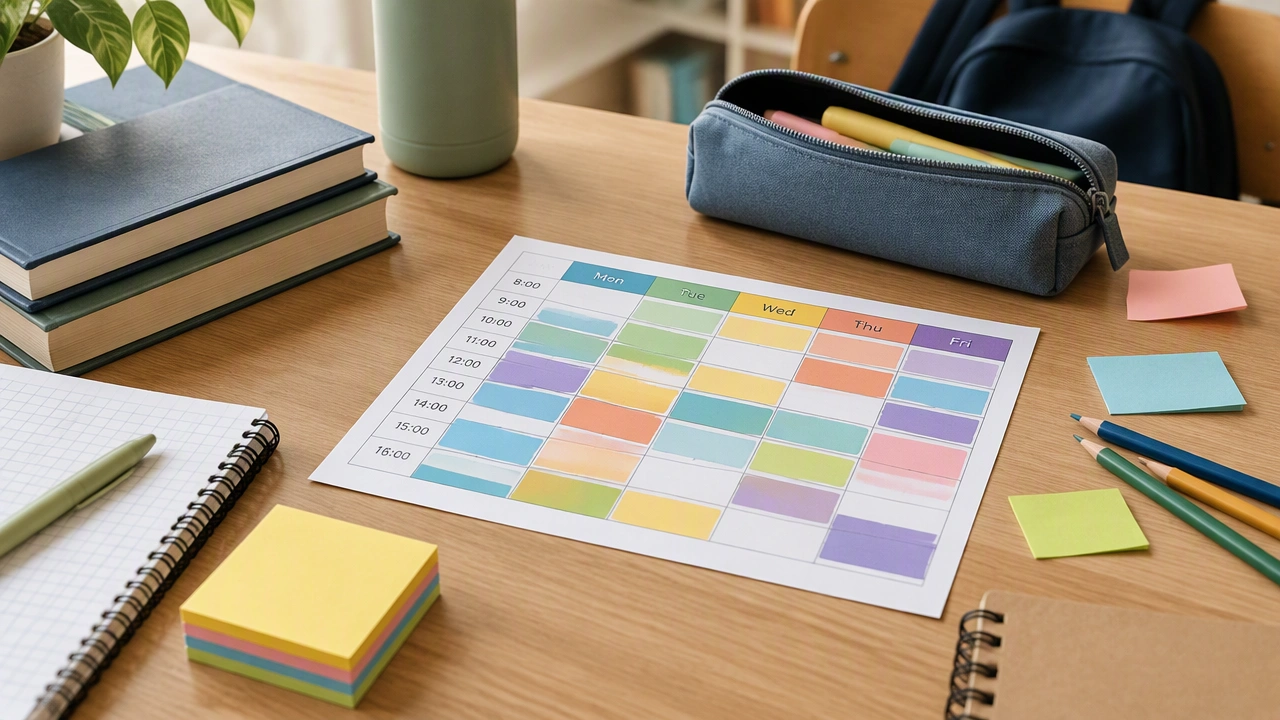
Many students find classic planners overwhelming and never actually use them. Time-blocking offers a more visual and flexible alternative. Instead of listing endless tasks, you divide your afternoon into clear blocks for homework, breaks, review, and free time. For example, 4:00 to 4:40 for math, 4:40 to 5:00 for a snack and movement, then 5:00 to 5:30 for reading. The key is to keep blocks realistic and include downtime so the plan feels doable. Some students use colors, sticky notes, or simple phone timers to stay on track without feeling controlled by a rigid schedule. Have you tried time-blocking or a similar method? What tools helped you stick to it, and where did you get distracted? Share your system and tips for making a study plan that actually gets followed after a long school day.